
What if your board members were more than just names on a letterhead or passive attendees at quarterly meetings? You likely feel the constant pressure of being the sole driver of your organization's growth while your board stays safely tucked behind the shield of "governance only." It's a heavy burden to carry. You need a team that doesn't just oversee the mission but actively fuels it. Implementing a structured board development plan for nonprofits is the essential first step toward shifting this dynamic and securing your future.
I'll show you how to transform your current board into a proactive resource development engine. We'll move past the cycle of high turnover and recruitment stress by building a clear, multi-year roadmap. You'll learn how to identify the right talent and increase revenue diversification through deeper engagement. We'll explore the practical mechanics of turning your board into a high-level partner that ensures long-term sustainability and structural health.
Key Takeaways
- Learn why a board development plan for nonprofits is the essential roadmap you need to move from organizational survival to long-term sustainability.
- Discover how to use a strategic diagnostic and skills matrix to identify gaps in your leadership. These tools help you prioritize revenue diversification and community influence.
- Shift your board's mindset from "asking for money" to sharing mission-driven opportunities through the use of specific strategic portfolios.
- Establish a clear recruitment pipeline for diverse, skilled leaders and book a strategy call to start transforming your board into a proactive resource engine.
Why Your Nonprofit Needs a Strategic Board Development Plan
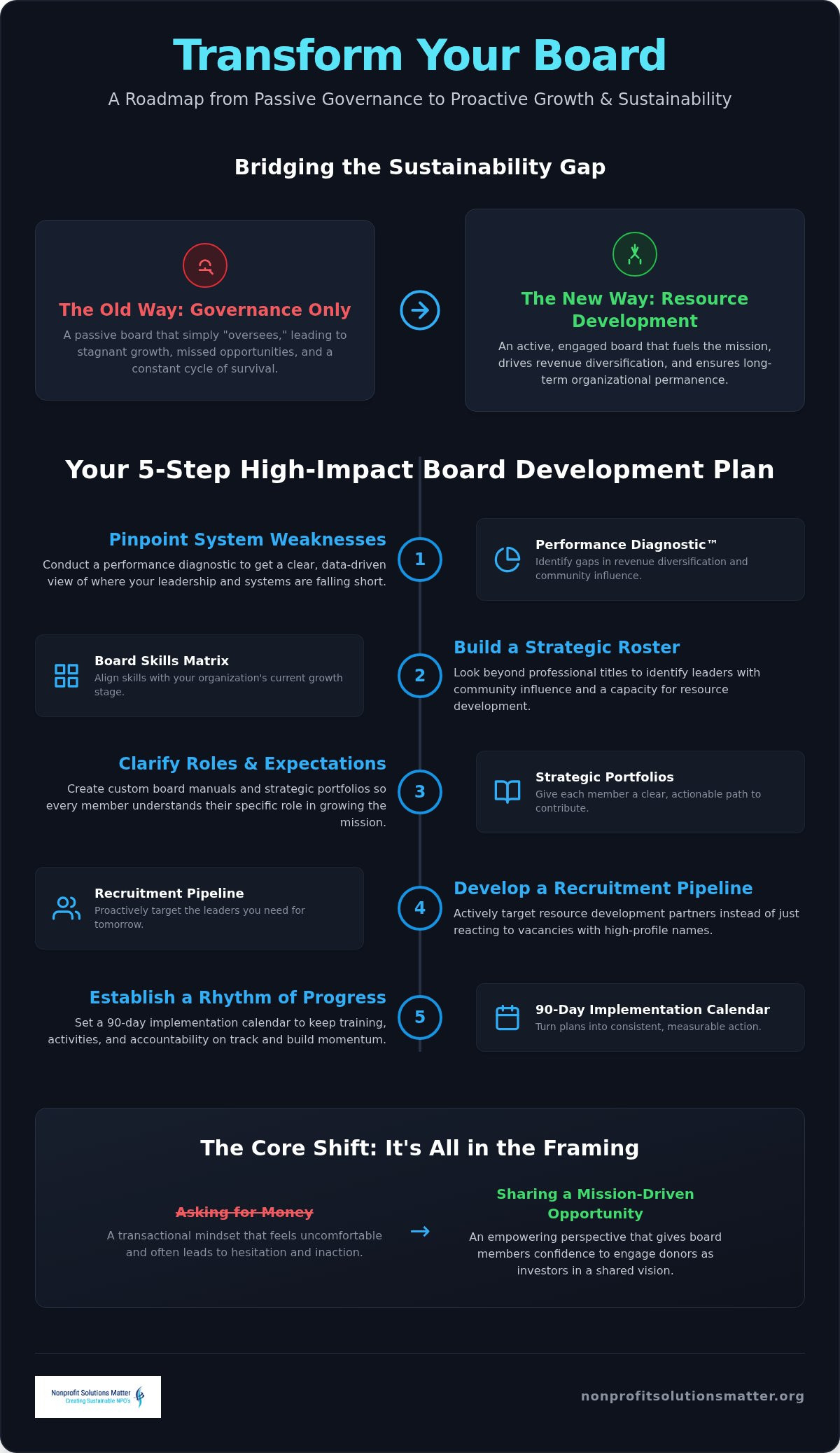
A board development plan for nonprofits is much more than a governance checklist. It's a multi-year roadmap designed to transform your leadership from a passive body into a proactive engine for growth. Without this structured path, many organizations suffer from founder's syndrome or stagnant revenue diversification. Relying on a single funding source is a high-risk strategy that keeps you in a cycle of constant survival rather than growth.
Moving toward sustainability requires architectural integrity. While basic board of directors' duties focus on oversight and compliance, a strategic plan focuses on activation. Your board is your most valuable asset for major gift acquisition and community wealth mapping. When they understand their role as resource partners, the organization shifts from immediate crisis toward long-term permanence. Our Board Empowerment workshop serves as the catalyst for this shift, moving your team from a mindset of scarcity to one of proactive leadership.
The Sustainability Gap: Governance vs. Resource Development
The gap between a board that simply "oversees" and one that "activates" revenue is where most nonprofits lose momentum. Passive boards often feel their job ends at the meeting room door, which is why a board development plan for nonprofits is so critical for health. This mindset of passivity leads to organizational stagnation and missed opportunities for meaningful donor engagement.
A Nonprofit Fundraising Audit: Survival to Sustainability often reveals that leadership gaps are the primary barrier to growth. By identifying these systemic weaknesses, you can build a board that understands its direct impact on financial health. If you're ready to bridge this gap and empower your leaders to become active resource developers, book a strategy call today to begin your transformation.
5 Steps to Creating a High-Impact Board Development Plan
Creating a high-impact board development plan for nonprofits isn't just about governance. It's a shift from passive oversight to active participation. It starts with a clear-eyed assessment of your current state. Follow these five steps to build a proactive team:
- Step 1: Conduct a Fundraising Performance Diagnostic™ to pinpoint exactly where your leadership and systems are falling short.
- Step 2: Build a Board Skills Matrix that looks past professional titles toward community influence and revenue diversification.
- Step 3: Create custom board manuals and strategic portfolios so every member understands their specific role.
- Step 4: Implement a recruitment pipeline that targets resource development partners rather than just high-profile names.
- Step 5: Set a 90-day implementation calendar to keep training and accountability on track.
This structured approach ensures your board development plan for nonprofits actually produces results instead of sitting on a shelf. It creates a rhythm of progress that moves your organization toward structural permanence.
The Board Skills Matrix: Beyond Professional Titles
Your board needs more than just a lawyer and an accountant to thrive. While those roles are important for compliance, sustainability requires members who understand wealth screening and prospect research. Use the $5 Million Nonprofit Growth Roadmap™ to align your board's specific skills with your current growth stage. This ensures you have the right people in the right seats at the right time to drive your organization forward.
Ongoing Board Empowerment and Governance Training
Passive boards don't become active overnight. Half-day or full-day Board Empowerment workshops serve as the catalyst for your plan, building personal-ask skills and confidence. These sessions move the needle from theory to action. You can use tools like Givebutter to manage board-led campaigns effectively. If you're ready to see these changes in your own organization, booking a strategy call is a great way to start your journey toward a proactive board.
Activating Your Board: From Governance to Resource Development
Transformation begins with a shift in perspective. Many board members hesitate because they view their role as "asking for money," which feels transactional and uncomfortable. Your board development plan for nonprofits should reframe this as "sharing a mission-driven opportunity." When leaders realize they're offering a chance for donors to invest in a cause they care about, their confidence grows. This psychological shift moves a board from a passive governing body to a proactive engine.
We implement this through "Strategic Portfolios." Instead of a generic expectation to help, each member receives a specific role in donor acquisition. Some might focus on community wealth mapping to identify untapped network opportunities, while others lead impact conversations with high-level prospects. Setting clear, individual goals for revenue diversification and personal contributions ensures everyone knows exactly how they contribute to the organization's durability. It's about turning their unique influence into a strategic asset.
Measuring Success in Board Development
Success isn't just a number on a balance sheet. You need to track behavioral shifts to see if your board development plan for nonprofits is actually working. Are members making introductions? Do they attend Impact Conversations? Monitor donor acquisition rates that stem directly from board activity to see the real-world results of their engagement. This data proves that a structured approach leads to measurable growth.
An annual review process is essential for maintaining this momentum. Evaluate individual performance against the strategic plan to ensure alignment with your long-term vision. This transparency builds accountability and rewards those who are truly invested in your mission. If you're ready to activate your leaders and move toward structural permanence, book a strategy call with us today to start the process.
Secure Your Organization's Future Through Strategic Leadership
Building a sustainable organization requires a shift from short-term crisis management to long-term structural health. A comprehensive board development plan for nonprofits provides the architectural framework needed to ensure your leadership isn't just checking boxes but driving growth. This transition isn't just about policy changes; it's about fostering a culture of proactive engagement. With over 30 years of global experience, Sharon D. Jones has helped organizations raise over $950 million by activating their most valuable leadership assets. Your mission deserves a board that acts as a true partner in revenue diversification.
Ready to move your board from passive to proactive?
The roadmap to sustainability is clear, and the tools for transformation are within reach. It's time to move beyond the pressure of solitary leadership and embrace a collaborative model that fuels your impact. Let's start building the proactive board your community needs.
Frequently Asked Questions
What is the difference between board training and a board development plan?
Board training is usually a single event focused on building specific skills, like understanding financial statements. In contrast, a board development plan for nonprofits is a multi-year roadmap that aligns leadership growth with long-term sustainability goals. It moves beyond one-off workshops to create a continuous cycle of recruitment, engagement, and accountability for the entire organization.
How often should a nonprofit update its board development plan?
You should review your plan annually to track progress against your goals and update it fully every two to three years. This regular cadence ensures your board remains agile and aligned with your current growth stage. As your organization moves from survival to sustainability, your leadership needs will shift, requiring fresh strategies for revenue diversification and community engagement.
Can a small nonprofit with a volunteer board really implement a resource development strategy?
Absolutely, small organizations often have the most to gain from a structured resource development strategy. Even with a volunteer board, you can focus on high-impact activities like community wealth mapping and making warm introductions. A clear board development plan for nonprofits helps volunteer leaders understand their specific roles, ensuring their limited time is used for maximum impact.
How do we handle board members who refuse to participate in revenue diversification?
Start by reframing the conversation to sharing mission-driven opportunities rather than "asking" for money. If members still refuse, use your Board Skills Matrix to see if they're in the right role. Clear expectations must be set during recruitment. If you need help navigating these leadership shifts, book a strategy call with us to discuss a tailored board empowerment approach.
Article by
Sharon D Jones
Sharon D. Jones, M.Div., is a globally respected fundraising strategist, nonprofit leadership expert, and capacity-building architect with over three decades of experience. As the Founder and CEO of Nonprofit Solutions Matter, Inc., her proprietary growth frameworks have successfully mobilized nearly $957 million in philanthropic capital for local, national, and international organizations.
General Disclaimer & Disclosure
The information provided on this website is for general informational and educational purposes only. While we strive to keep content accurate and up to date, we make no representations or warranties of any kind, express or implied, about the completeness, accuracy, reliability, or suitability of the information contained herein.
Professional Advice
The content on this site does not constitute professional advice (e.g., legal, financial, medical, or tax). You should consult with a qualified professional before making any decisions based on the information provided on this website. Any action you take upon the information found on this site is strictly at your own risk.
Affiliate & Third-Party Links
Some articles on this site may contain affiliate links. If you click on an affiliate link and make a purchase, we may receive a small commission at no additional cost to you. We only recommend products or services we believe add value to our readers. We are not responsible for the content, privacy policies, or practices of any third-party websites linked within our articles.


