
What if your board meetings were no longer a series of polite nods and ceremonial reports, but the strategic engine that fuels your organization’s growth? It's normal to feel anxious when the line between governance and daily operations gets blurred, especially when you’re expected to drive resource development without a clear map. Understanding the specific board member roles and responsibilities nonprofit leaders must uphold is the first step. Clarity starts here.
We’ll show you how to transform from a passive oversight group into a high-impact partner. You’ll learn to master your legal duties while gaining the confidence to lead revenue diversification efforts. Let’s move beyond the crisis mindset and build a foundation for structural permanence and systemic health together.
Key Takeaways
- Master the foundational board member roles and responsibilities nonprofit leaders need to ensure both legal compliance and strategic alignment.
- Learn how to actively contribute to resource development and revenue diversification through team based strategy rather than individual sales tactics.
- Discover how to shift your board’s focus from day to day survival to the long term architectural health and sustainability of the organization.
- Set clear, measurable performance goals that move your board toward high impact leadership and book a strategy call to explore our Board Empowerment workshop.
The Three Pillar Duties of Every Nonprofit Board Member
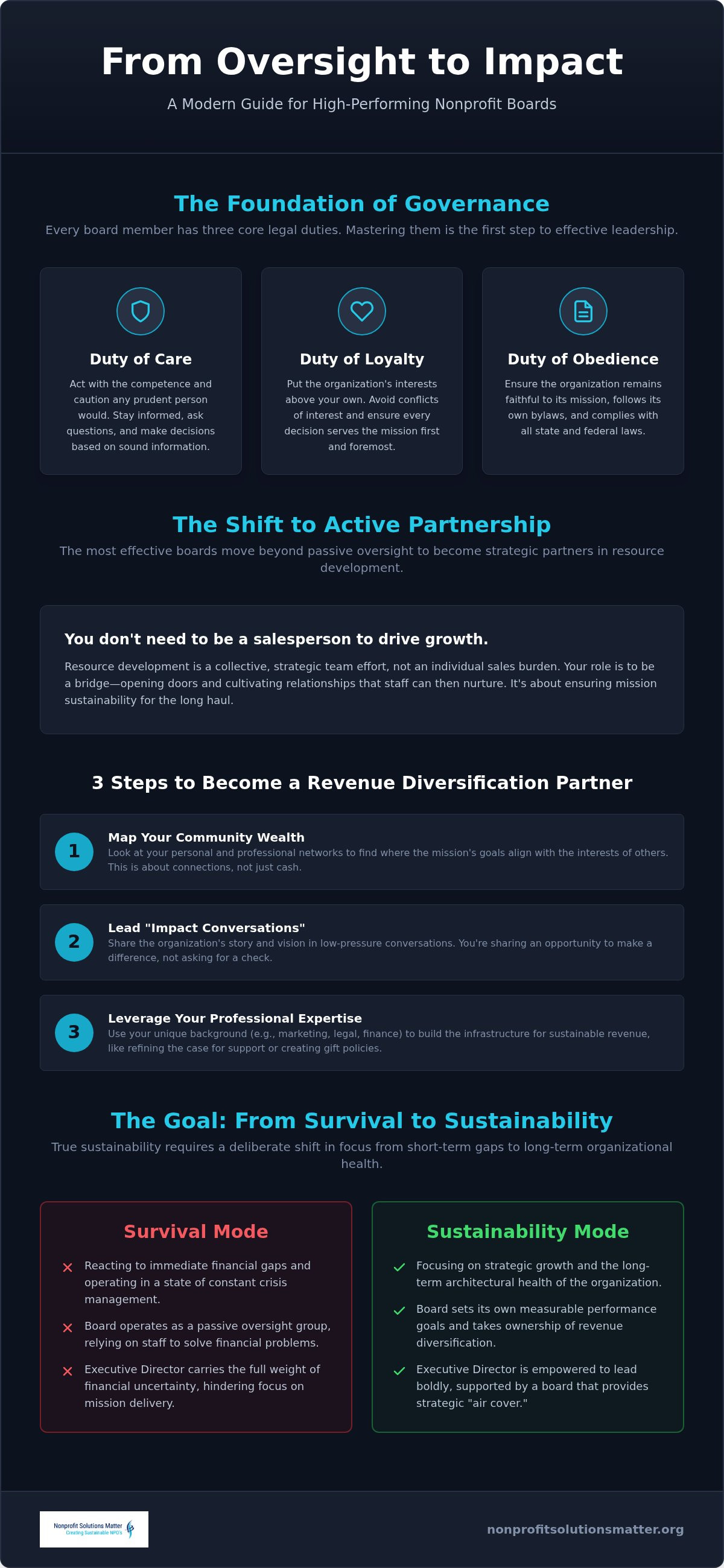
Stepping into a leadership role means moving from a supporter to a legal guardian of the mission. The board member roles and responsibilities nonprofit leaders carry are anchored in three core legal pillars. First is the Duty of Care. This means you're expected to act with the same competence and caution that any ordinary, prudent person would use in a similar situation. It's about showing up, staying informed, and making decisions based on sound information rather than assumptions.
Next is the Duty of Loyalty. You must put the organization’s interests above your own personal or professional gain. If a decision benefits your business but compromises the nonprofit, your loyalty belongs to the mission. Finally, there's the Duty of Obedience. This ensures the organization stays faithful to its stated purpose and complies with all state and federal laws. This compliance isn't just an internal checklist. The IRS makes governance answers on Form 990 public, meaning donors and watchdog groups are watching your transparency. Understanding these board member roles and responsibilities nonprofit organizations depend on creates a culture of accountability. Fiduciary duty is the legal obligation to act in the best interest of the mission at all times.
Fiduciary Oversight and Mission Integrity
As a board member, you’re the ultimate steward of public trust and donor intent. You don't need to be a CPA to provide effective oversight. Start by focusing on the narrative behind the numbers. Look for trends in resource development and ensure expenses align with your strategic goals. Adopting a robust conflict of interest policy is your best defense against ethical slips. It protects the organization's reputation and ensures every vote is cast with integrity. If you're feeling overwhelmed by these legal expectations, book a strategy call today. We can help you build the systems needed for structural permanence and long-term health.
Shifting from Passive Oversight to Active Resource Development
The most common fear we encounter in the boardroom is the expectation to "sell." Many leaders worry they'll be forced into uncomfortable solicitations. In reality, you don't need to be a salesperson to drive growth. Resource development is a collective strategic effort, not an individual burden. When we look at board member roles and responsibilities nonprofit excellence requires, we see that your primary job is to act as a bridge. You are there to open doors and cultivate relationships that the staff can then nurture. Resource development is about mission sustainability, not just hitting a quarterly number.
Steps to Become a Revenue Diversification Partner
Start by identifying your "Community Wealth Map." This isn't just a list of wealthy donors. It's a look at your personal and professional networks to see where the mission's goals align with the interests of others. Once you've mapped these connections, you can participate in "Impact Conversations." These are low pressure opportunities to share the organization’s story with potential stakeholders. You aren't asking for a check; you're sharing a vision. If you're still unsure where you fit, consider our Board Empowerment workshop to help align your team.
You can also leverage your specific professional background to build the necessary resource development infrastructure. A marketing expert might help refine the case for support, while a legal professional ensures gift acceptance policies are airtight. These contributions create a foundation for revenue diversification that lasts for years. This move toward structural permanence ensures the organization thrives long after your term ends. By focusing on these high impact activities, you transform from a passive observer into a strategic architect of the future. To start building this framework, we invite you to book a strategy call today.
Practical Strategies for Moving Your Organization to Sustainability
Many organizations are trapped in "Survival Mode." They react to immediate financial gaps and operate in a state of constant crisis management. True sustainability requires a deliberate shift toward "Sustainability Mode," where the board focuses on strategic growth and long term architectural health. One of the most critical board member roles and responsibilities nonprofit leaders must embrace is setting annual, measurable performance goals for the board itself. These aren't just for the staff; the board needs its own roadmap to stay on track. This transition is explored deeply in our Resource Development Audit: Survival to Sustainability guide.
Your board also serves as the primary support system for your Executive Director or CEO. This relationship is a partnership. It isn't just about annual evaluations; it’s about providing the "air cover" needed for bold leadership. When the board takes ownership of revenue diversification, the ED can focus on mission delivery without the constant weight of financial uncertainty. This shared responsibility is the hallmark of a healthy, durable organization.
Building a Culture of Accountability and Engagement
Moving beyond "rubber stamping" decisions requires a shift in meeting dynamics. Instead of just reviewing past reports, engage in strategic dialogue that looks forward. We recommend creating custom board manuals and strategic portfolios for every member. This ensures everyone has a clear, actionable part to play. Utilizing tools like the Revenue Performance Diagnostic™ can help you identify governance gaps before they become systemic failures. This proactive approach builds a culture of durability and momentum. Ready to move from oversight to impact? Book a strategy call with us to start your journey toward sustainable governance.
Building Your Sustainable Future
Success in the boardroom isn't about maintaining the status quo. It’s about evolving into a high-impact team that understands the full scope of board member roles and responsibilities nonprofit leadership requires. By moving from passive oversight to active revenue diversification, you ensure your organization doesn't just survive; it thrives. You've seen how the pillar duties and a focus on long-term sustainability can change your trajectory. Now it's time to put those systems into practice.
Our team at Nonprofit Solutions Matter, Inc. is ready to guide you through this transition. Our founder, Sharon D. Jones, brings over 30 years of global experience and has helped raise over $950 million for various causes. As a BIPOC-led consultancy, we're deeply committed to your mission’s durability and systemic health.
Book a free strategy call with Nonprofit Solutions Matter, Inc. today You have the power to architect a future that lasts. We're here to help you build the foundation for that growth.
Frequently Asked Questions
What is the difference between a nonprofit board member and a trustee?
In the United States, these terms are often used interchangeably. Technically, a "trustee" is more common in foundations or universities, while "board member" is the standard for most 501(c)(3) organizations. Regardless of the title, the board member roles and responsibilities nonprofit leaders hold remain the same. You are legally bound to protect the organization's assets and mission through diligent, informed oversight.
Can nonprofit board members be paid for their service?
Most nonprofit board members serve as volunteers. While it's legally possible in some cases, the IRS prefers a majority of the board to be "independent," meaning they aren't paid. Paying members often creates a conflict of interest that can damage public trust and donor confidence. Instead of a salary, most organizations offer reimbursement for travel or direct expenses related to their service.
How much time should a board member expect to commit each month?
You should typically expect to commit between four and ten hours per month. This time is split between formal meetings, committee work, and active participation in resource development. High impact boards move beyond mere attendance. They use their time to build relationships and support revenue diversification strategies. This ensures the organization moves from survival toward long term sustainability. Clarity fuels growth.
What happens if a nonprofit board member fails to fulfill their responsibilities?
Failing to fulfill your duties can lead to personal legal liability or removal from the board. If a member neglects their fiduciary duties, the organization risks losing its tax exempt status or facing IRS penalties. It's why we emphasize the board member roles and responsibilities nonprofit governance requires. Your role is vital. Protecting the mission requires active engagement and a commitment to long term health.
Ready to strengthen your governance? Book a strategy call today to see how our Board Empowerment workshops can transform your leadership team and drive lasting impact.
Article by
Sharon D Jones
Sharon D. Jones, M.Div., is a globally respected fundraising strategist, nonprofit leadership expert, and capacity-building architect with over three decades of experience. As the Founder and CEO of Nonprofit Solutions Matter, Inc., her proprietary growth frameworks have successfully mobilized nearly $957 million in philanthropic capital for local, national, and international organizations.
General Disclaimer & Disclosure
The information provided on this website is for general informational and educational purposes only. While we strive to keep content accurate and up to date, we make no representations or warranties of any kind, express or implied, about the completeness, accuracy, reliability, or suitability of the information contained herein.
Professional Advice
The content on this site does not constitute professional advice (e.g., legal, financial, medical, or tax). You should consult with a qualified professional before making any decisions based on the information provided on this website. Any action you take upon the information found on this site is strictly at your own risk.
Affiliate & Third-Party Links
Some articles on this site may contain affiliate links. If you click on an affiliate link and make a purchase, we may receive a small commission at no additional cost to you. We only recommend products or services we believe add value to our readers. We are not responsible for the content, privacy policies, or practices of any third-party websites linked within our articles.


