
More resource development events do not automatically build stronger donor relationships. Common nonprofit resource development mistakes include letting events replace personal conversations, asking before building trust, and setting targets without a realistic budget.
It’s understandable to focus on visible activities and immediate revenue when your mission depends on steady support. But resource development is stronger when each effort fits a broader plan. Here at Nonprofit Solutions Matter, Inc., we know that avoiding common nonprofit fundraising mistakes is essential for long-term success. This article explores how to balance events with personal visits, nurture donor relationships before making an ask, and set goals and budgets your organization can act on with confidence. You’ll also see how a thoughtful, consistent approach can help make donor outreach more personal and sustainable for organizations everywhere.
Key Takeaways
- Use events to create meaningful opportunities for connection, and make room for personal conversations with supporters.
- Build trust through thoughtful, ongoing communication before making a donation request.
- Set revenue goals and budgets around donor history, retention, and realistic opportunities for growth.
- Align outreach, relationship-building, and financial planning so each effort supports your mission over time.
1. Balancing resource-development events with personal visits
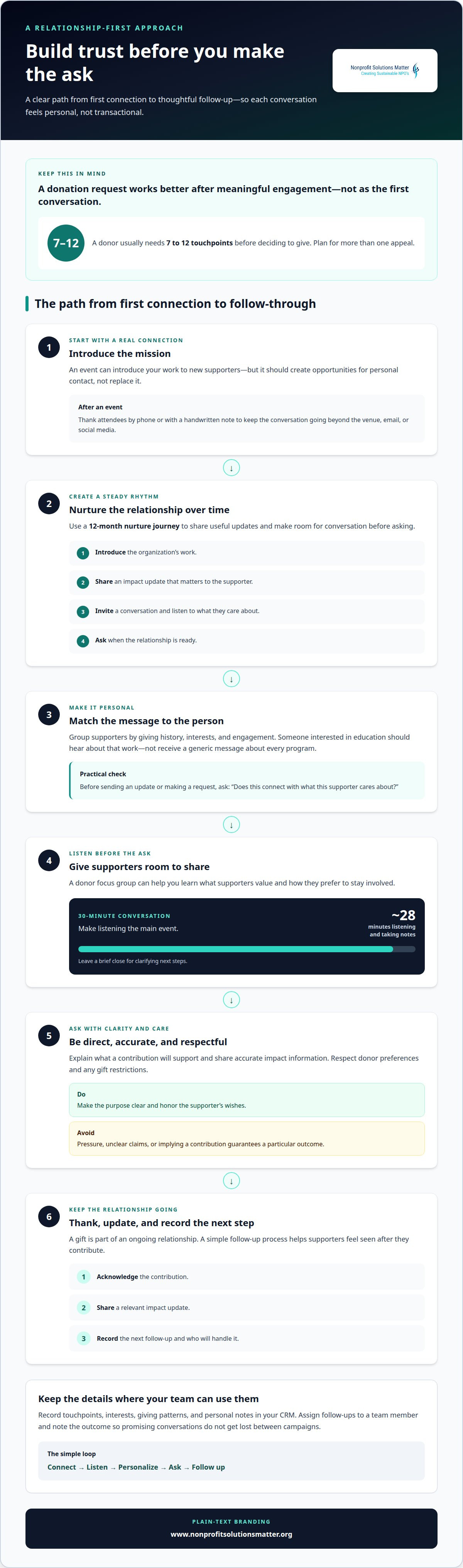
Events can introduce your mission to new supporters, but they should not replace personal contact. After an event, thank attendees by phone or with a handwritten note to continue the conversation beyond the venue, email, or social media. Measure an event by more than its profit: consider the relationships it builds and whether it advances your mission.
Pennsylvania nonprofits must follow the federal, state, and local requirements that apply to their legal and tax status and resource-development activities. Which requirements apply depends on the organization’s circumstances, so include a compliance review in the annual plan and seek qualified guidance for specific legal or tax questions.
Organizations can rely too heavily on major donors or events because those sources feel familiar and visible. That concentration exposes revenue to changes in a key supporter’s priorities or an event that underperforms. Map current income sources, then identify practical ways to broaden outreach while keeping approaches that serve the mission.
Donor follow-up can falter when thanks arrive late, communication stops after a gift, or every supporter receives the same message. Set a simple process: acknowledge the contribution, share a relevant impact update, and record the next follow-up. Treating each interaction as part of a relationship supports retention better than contacting donors only when another appeal is due.
Neglecting recurring gifts and planned giving can leave an organization dependent on occasional appeals and a narrow donor base. Small nonprofits can diversify with a manageable mix of personal visits, regular donor updates, and invitations to consider recurring support, alongside an annual event. Focus on one audience, one clear message, and consistent outreach. This builds relationships and revenue without stretching staff across too many activities.
2. Building relationships before soliciting donations
A donation request works better when it follows meaningful engagement. A donor usually needs 7 to 12 touchpoints before deciding to give, so plan more than one appeal. Map a supporter’s journey from first introduction to deeper involvement, then tailor each interaction to their interests and connection to your mission.
Use a 12-month nurture journey to create a steady rhythm: introduce the organization’s work, share a relevant impact update, invite a conversation, and make an ask when the relationship is ready. Segment members by giving history, interests, and engagement. A supporter interested in education, for example, should hear about that work rather than receive a generic message about every program.
Common appeal mistakes include asking before establishing trust, sending identical messages to everyone, and making unclear claims about how donations will be used. Ethical solicitation means explaining the purpose clearly, sharing accurate impact information, respecting donor preferences, and honoring any restrictions on a gift. Avoid pressure or implying that a grant or contribution guarantees a particular outcome.
Listening can strengthen the foundation for future giving. A 30-minute donor focus group can reserve about 28 minutes for listening and notes, leaving a brief close for clarifying next steps. Record useful details, such as a supporter’s interests and preferred follow-up, in the organization’s CRM so future conversations feel informed, not transactional.
Raising support can feel difficult when revenue depends on urgent appeals. A relationship map helps team members coordinate personal outreach, while planned conversations can reveal what supporters value before a request. Assign each follow-up to a team member and record the outcome so promising conversations are not lost between campaigns.
Record donation patterns and personal notes in a CRM, and track donor touchpoints to guide conversations. Events can thank supporters and identify potential major prospects; feasibility studies test campaigns with closest donors and stakeholders before launch.
3. Setting resource development goals and budgets
A resource development target without a budget can leave programs relying on revenue that never arrives. Base projections on giving history, expected attrition, and untapped potential, then connect each goal to the mission and planned activities. Financial projections for one, three, and five years can help leaders distinguish immediate funding needs from longer-term growth.
Choose a small set of indicators to show whether a campaign is working. Review them monthly, including donor retention, average gift, new donors acquired, and net revenue by activity. Calculate cost per dollar raised by dividing direct campaign costs by revenue received. Consider the measures together: high gross revenue can still mean limited net revenue when expenses are substantial.
For an event, set a spending limit before making commitments. List the venue, materials, promotion, and other direct costs, then compare actual expenses with the approved budget. Afterward, subtract those costs from event income to calculate net revenue. Also record new donor contacts and completed follow-up, since relationships can matter beyond immediate proceeds.
Separate confirmed funding from projected contributions, and do not assign uncertain revenue to essential programs. For example, if a development team must cover a budget shortfall as well as its existing annual target, make both obligations visible in the plan. Share realistic assumptions with board members and the people responsible for delivery. Monthly reviews can help identify adjustments to timing, spending, or outreach before a funding gap disrupts services.
One illustrative target is $25,000 from high-net-worth donors before March 2022, for research and development of a distance-learning program. The plan could seek five individual donors at $5,000 each. Projections should examine historical donors, attrition rates, and untapped potential. Development departments may also need to account for a budget shortfall alongside an existing annual revenue obligation. Establish resource development KPIs and review them monthly to identify trends and optimization opportunities.
Nonprofit Solutions Matter
Nonprofit Solutions Matter, Inc. helps mission-driven organizations strengthen resource development and long-term sustainability. A Resource Development Audit can identify gaps and priorities when donor outreach is disconnected from revenue goals. Executive Coaching & Leadership Development and Board Engagement & Governance Training help leaders and board members build shared responsibility. The Donor Acquisition Program supports organizations in developing their approach to reaching prospective supporters.
These services are especially relevant when events, personal outreach, and financial planning do not work together as a clear system. The right starting point depends on your organization’s needs and capacity.
Book a strategy call with Nonprofit Solutions Matter, Inc..
Build a More Sustainable Path Forward
Recognizing common nonprofit resource development mistakes is a starting point, not a complete strategy. Lasting progress comes from strengthening the systems and leadership that make donor relationships and resource development part of ongoing work. Nonprofit Solutions Matter offers Resource Development Audits, Executive Coaching & Leadership Development, and Board Engagement & Governance Training to help organizations identify priorities and build capacity.
If your team is ready to turn its next steps into a more durable plan, begin a conversation about what your organization is building.
Steady, mission-aligned progress can help create the conditions for your organization to grow with purpose.
Frequently Asked Questions
What are the most common nonprofit resource development mistakes?
Common nonprofit resource development mistakes include relying on a narrow group of supporters, making requests before building relationships, and treating gross income as the only measure of success. Another risk is sending an appeal without explaining the need or how contributions will be used. Before launching a campaign, clarify its purpose, audience, costs, and follow-up plan.
How can nonprofits set realistic resource development goals and budgets?
Set goals using evidence your organization can explain, such as past giving patterns, expected donor attrition, and prospects who have not yet been engaged. Budget for campaign expenses and separate confirmed income from projected contributions. Test assumptions against program needs: if projected revenue falls short, identify activities to adjust without compromising essential services.
Article by
Sharon D Jones
Sharon D. Jones, M.Div., is a globally respected fundraising strategist, nonprofit leadership expert, and capacity-building architect with over three decades of experience. As the Founder and CEO of Nonprofit Solutions Matter, Inc., her proprietary growth frameworks have successfully mobilized nearly $957 million in philanthropic capital for local, national, and international organizations.
General Disclaimer & Disclosure
The information provided on this website is for general informational and educational purposes only. While we strive to keep content accurate and up to date, we make no representations or warranties of any kind, express or implied, about the completeness, accuracy, reliability, or suitability of the information contained herein.
Professional Advice
The content on this site does not constitute professional advice (e.g., legal, financial, medical, or tax). You should consult with a qualified professional before making any decisions based on the information provided on this website. Any action you take upon the information found on this site is strictly at your own risk.
Affiliate & Third-Party Links
Some articles on this site may contain affiliate links. If you click on an affiliate link and make a purchase, we may receive a small commission at no additional cost to you. We only recommend products or services we believe add value to our readers. We are not responsible for the content, privacy policies, or practices of any third-party websites linked within our articles.


