
A generous church is built through formation, not a single appeal. Church stewardship consulting helps connect biblical financial coaching with leadership development and consistent teaching, so generosity becomes part of congregational life rather than a seasonal initiative. The work can also strengthen how leaders communicate purpose, guide giving conversations, and align resources with the church’s mission.
Church leaders know people respond to more than a budget need: trust, clarity, and a meaningful connection to ministry matter. The challenge is turning those convictions into a durable approach that supports spiritual growth and organizational health. This article explains how church stewardship consulting can support biblical financial coaching, equip leaders to guide the process, and nurture a lasting culture of generosity. It also outlines what shapes an effective engagement, from congregational needs and leadership readiness to systems that sustain the work over time.
Key Takeaways
- See how biblical financial coaching can support individuals, couples, and small-business owners while connecting personal decisions with faith.
- Learn how consistent stewardship education and leadership involvement can help generosity become part of a church’s culture.
- Use practical criteria to assess a consultant’s experience, approach, and fit with your church’s needs.
- Explore how organizational audits, leadership development, governance training, and donor acquisition support stronger resource development.
Biblical financial stewardship coaching for churches
Biblical financial stewardship coaching connects money choices with a church’s ministry, vision, and spiritual formation. A consultant can align teaching, personal coaching, and leadership practices around generosity.
One-on-one coaching helps members consider spending, debt, saving, and giving in light of their values. For example, a household can create a workable budget without sharing private financial details with the congregation.
Small-business coaching can address cash flow, business decisions, and charitable priorities. Premarital and marriage counseling can help couples discuss spending, saving, financial roles, and approaches to money-related conflict.
Leaders can assess stewardship health by reviewing participation, recurring giving, budget alignment, and ministry outcomes. Reporting can connect these measures to church priorities while protecting individuals’ financial information.
Stewardship consultants connect biblical formation, leadership, and financial habits. Resource-development consultants focus more directly on revenue planning and supporter engagement.
For modern congregations, legal and tax questions about donations depend on the church’s circumstances. Qualified legal or tax professionals can provide advice tailored to those details.
No single stewardship consulting firm suits every congregation. When evaluating options like Nonprofit Solutions Matter, Inc., compare experience with faith communities, clear methods, leadership fit, and practical reporting.
For a capital campaign, consultants clarify purpose, prepare communications, organize commitments, and track progress. Campaigns often run two to three years, with active implementation around six months. Pledge aims may reach 1.5 to 2.5 times annual income over a 2-3 year commitment period.
Risks include inflated goals, weak accountability, and separating giving from ministry. Churches can consider whether remote or in-person support best fits their congregation.
Christian Stewardship Network says discipling a congregation in biblical financial stewardship can help a church grow financially and spiritually. This frames stewardship coaching as more than guidance on money decisions: it can connect financial formation with a church’s broader growth. For congregations considering this approach, the potential includes both financial and spiritual development, not financial growth alone.
Generosity culture and stewardship education
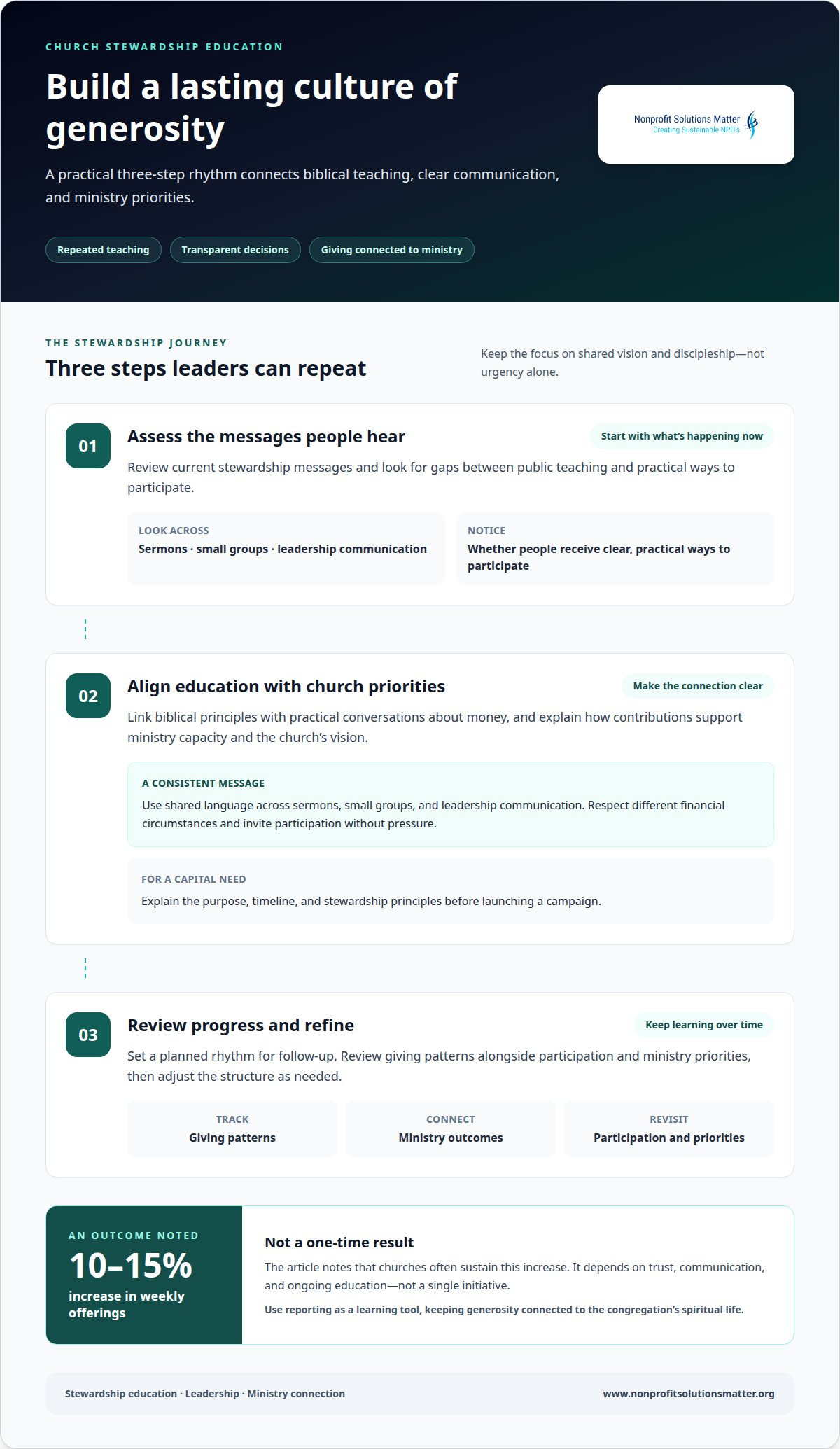
A culture of generosity develops through repeated teaching, transparent decisions, and visible connections between giving and ministry. A consultant can help leaders map an annual stewardship journey, linking biblical principles with practical conversations about money. For example, a church might pair a teaching series with clear updates on how resources support its vision. This makes stewardship part of discipleship, rather than a seasonal request.
Education works best when messages are consistent across sermons, small groups, and leadership communication. Consultants can help church leaders develop shared language, prepare teaching materials, and explain how contributions support ministry capacity. They can also identify gaps, such as discussing generosity publicly without giving members practical ways to participate. An effective approach respects different financial circumstances and invites participation without pressure.
To build lasting habits, a consultant can guide leaders through three steps: assess current messages, align education with church priorities, and review progress. The process can include clear reporting on ministry outcomes and a planned rhythm for follow-up. For a capital need, leaders can explain the purpose, timeline, and stewardship principles before launching a capital campaign. The focus remains on shared vision, not urgency alone.
Churches often sustain a 10 to 15 percent increase in weekly offerings. That outcome depends on trust, communication, and ongoing education, not a single initiative. Consultants help leaders interpret giving patterns alongside participation and ministry priorities, then refine the structure. This turns financial reporting into a tool for learning and helps generosity remain connected to the congregation’s spiritual life.
How do churches choose a qualified stewardship consultant?
Church stewardship consulting should begin with the church’s specific need: member education, leadership alignment, or campaign planning. The proposed scope should address that priority directly. A congregation preparing a capital project, for example, needs a different plan from one seeking stronger financial teaching. Clear goals help leaders judge whether the approach fits their ministry and decision-making structure.
Next, examine the consultant’s method. A sound process identifies stakeholders, reviews current communication, and sets practical measures of progress. Clarify how leaders, staff, and members will participate. A church stewardship consulting plan focused only on financial targets may overlook the spiritual and organizational dimensions of stewardship. The consultant should explain how recommendations connect giving practices with the church’s stated mission.
Also assess communication and accountability. Agree on who receives progress updates, how sensitive information is handled, and when leaders review findings. A written scope can clarify responsibilities, deliverables, and decision points. These details help the board understand the work and keep expectations aligned throughout the engagement.
Finally, consider cultural fit and capacity to implement the recommendations. A consultant should listen carefully to the congregation’s language, traditions, and leadership context before suggesting changes. Leaders can discuss a sample scenario, such as explaining a new giving initiative to members. The response can show whether the consultant communicates with care, respects differing circumstances, and turns strategy into manageable next steps.
Nonprofit Solutions Matter
Nonprofit Solutions Matter, Inc. helps church leaders connect stewardship priorities with stronger organizational capacity. Consider support when financial education, leadership alignment, or resource development needs a more deliberate structure. This work can clarify barriers and identify practical priorities while keeping the church’s mission central.
A Resource Development Audit can help leaders examine current practices, identify gaps, and see where systems need attention. Executive Coaching & Leadership Development can support leaders managing complex decisions or guiding change. These services can help when the challenge calls for alignment among leadership, resources, and long-term direction.
When board roles or oversight need greater clarity, Board Engagement & Governance Training can strengthen understanding of responsibilities and decision-making. A Donor Acquisition Program can help organizations broaden their supporter base. The right starting point depends on the church’s priorities, current capacity, and the decisions its leaders need to make.
These services help leaders move from broad stewardship goals toward a more coordinated organizational approach. Start by identifying the central challenge and the kind of support that fits it.
Frequently Asked Questions
What services do church stewardship consultants provide?
Church stewardship consultants can support planning, leadership alignment, stewardship education, and campaign measurement. The scope depends on a church’s priorities. For example, leaders reviewing resource practices may use an audit to identify gaps, while a board seeking clearer roles may benefit from governance training. Consultants can also help define responsibilities, communication rhythms, and ways to connect resources with ministry outcomes.
How much does church stewardship consulting cost in Pennsylvania?
Church stewardship consulting costs in Pennsylvania depend on the project’s scope, complexity, duration, and level of support. There is no single fee that fits every congregation. A quote request should describe the church’s goals, leadership involvement, and expected analysis or implementation support. These factors help shape a project-specific fee without relying on a generic industry estimate.
How can a church stewardship consultant help measure the success of a stewardship campaign?
A consultant can establish a baseline, then track campaign activity against agreed objectives. Measures may include pledge participation, gifts received, recurring giving, and progress toward the campaign’s stated purpose. Leaders can also review whether members understand how resources support ministry. Comparing these indicators over time helps distinguish immediate campaign results from stronger engagement and sustained stewardship practices.
What are the best church stewardship consulting firms serving Pennsylvania?
No single Pennsylvania firm suits every congregation. Compare experience with faith communities, clear methods, leadership fit, and practical reporting. Nonprofit Solutions Matter, Inc. offers audits, leadership development, governance training, and donor acquisition support.
Article by
Sharon D Jones
Sharon D. Jones, M.Div., is a globally respected fundraising strategist, nonprofit leadership expert, and capacity-building architect with over three decades of experience. As the Founder and CEO of Nonprofit Solutions Matter, Inc., her proprietary growth frameworks have successfully mobilized nearly $957 million in philanthropic capital for local, national, and international organizations.
General Disclaimer & Disclosure
The information provided on this website is for general informational and educational purposes only. While we strive to keep content accurate and up to date, we make no representations or warranties of any kind, express or implied, about the completeness, accuracy, reliability, or suitability of the information contained herein.
Professional Advice
The content on this site does not constitute professional advice (e.g., legal, financial, medical, or tax). You should consult with a qualified professional before making any decisions based on the information provided on this website. Any action you take upon the information found on this site is strictly at your own risk.
Affiliate & Third-Party Links
Some articles on this site may contain affiliate links. If you click on an affiliate link and make a purchase, we may receive a small commission at no additional cost to you. We only recommend products or services we believe add value to our readers. We are not responsible for the content, privacy policies, or practices of any third-party websites linked within our articles.


