
A donation isn’t the finish line. It’s one moment in a donor lifecycle that can deepen into a lasting relationship, or stall when the next step is unclear. Treating that journey as a one-way funnel misses an essential truth: supporters may move between stages as their circumstances and connection to your mission change.
If donor communication feels disconnected, or your team isn’t sure what should follow a gift, a clear lifecycle framework can help. It gives staff practical next steps without requiring every supporter to receive the same message. This article explains the major stages of a supporter relationship, what donors may need at each point, and how to plan timely, relevant communication. You’ll also find ways to align people, processes, and data so the work is manageable for your team and supports your organization’s sustainability.
Key Takeaways
- View the donor lifecycle as an ongoing relationship, with supporters’ needs shifting as their connection to your mission develops.
- Pair each stage with a useful next communication, and assign someone to follow through.
- Record essential relationship notes and commitments in one shared place to reduce gaps between team members.
- Assess how leadership, staffing, systems, and data shape your donor lifecycle, then prioritize practical improvements.
What Is the Donor Lifecycle? A Relationship Loop from First Contact to Renewed Engagement
The donor lifecycle is the evolving relationship between a nonprofit and the people who encounter, support, and connect with its mission. It helps teams decide what a supporter may need next, rather than treating a gift as an isolated transaction. The framework is part of the broader practice of resource development; Fundraising on Wikipedia offers general background on the wider activity.
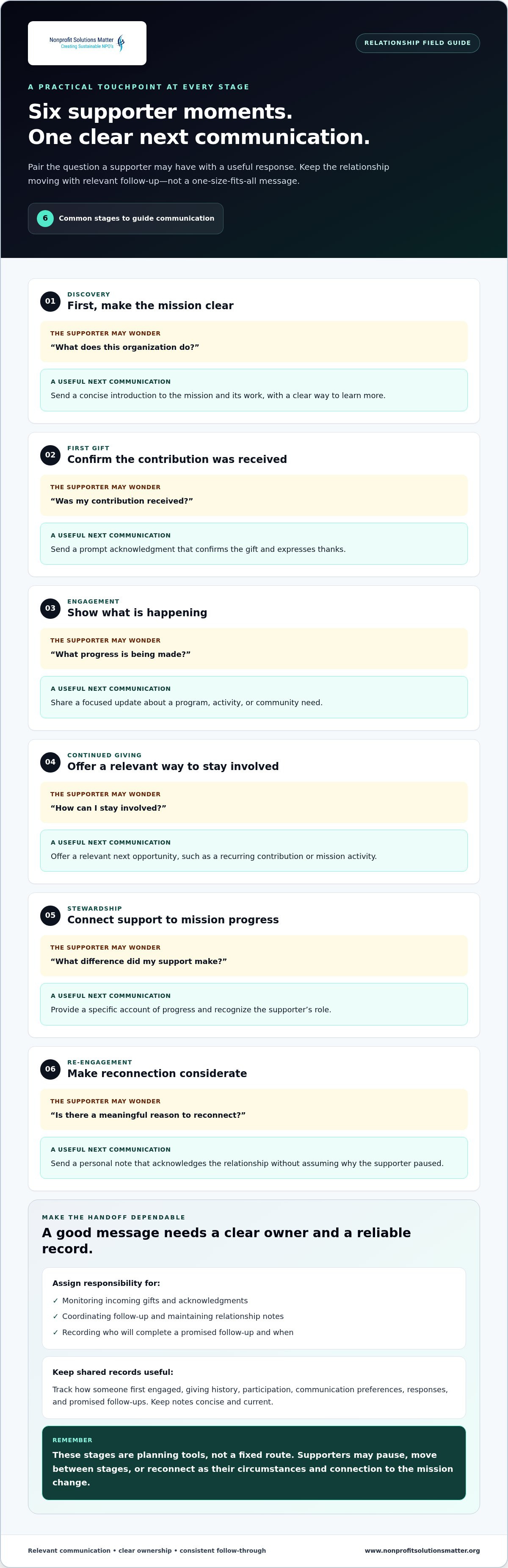
These common stages can help teams plan, but they aren’t a fixed route every person follows:
- Discovery: Someone first learns about the organization or its mission.
- First gift: A supporter makes an initial contribution.
- Engagement: They learn more, attend an activity, or respond to mission updates.
- Continued giving: They choose to support the work again or on a recurring basis.
- Stewardship: The organization acknowledges their support and shares how it contributes to the mission.
- Re-engagement: After a pause, a relevant invitation may reopen the relationship.
Why the Donor Lifecycle Is a Loop, Not a One-Way Funnel
Supporters’ circumstances, interests, and capacity can change. Someone may give once, stay connected through updates, pause for a time, then return when a program or need resonates. Another person may engage deeply before making a gift. A useful donor lifecycle makes room for these different patterns instead of assuming that every supporter moves forward in the same order.
Stewardship can create a natural opening for renewed engagement. A thoughtful update that connects support to mission progress may prompt a donor to respond, give again, or introduce someone else to the organization. Treat the stages as planning tools, not labels of commitment or measures of a person’s value. Use them to guide relevant communication while leaving room for each relationship to develop on its own terms.
How to Manage the Donor Lifecycle with Practical, Mission-Aligned Touchpoints
Make the donor lifecycle practical by pairing each stage with a supporter’s likely question and one useful next communication. The goal isn’t to build a separate campaign for every person. It’s to ensure someone is responsible for a relevant, timely response and that follow-up is recorded.
- Discovery: “What does this organization do?” Send a concise introduction to the mission and its work, with a clear way to learn more.
- First gift: “Was my contribution received?” Send a prompt acknowledgment that confirms the gift and expresses thanks.
- Engagement: “What progress is being made?” Share a focused update about a program, activity, or community need.
- Continued giving: “How can I stay involved?” Offer a relevant next opportunity, such as a recurring contribution or mission activity.
- Stewardship: “What difference did my support make?” Provide a specific account of progress and recognize the supporter’s role.
- Re-engagement: “Is there a meaningful reason to reconnect?” Send a considerate personal note that acknowledges the relationship without assuming why the supporter paused.
Good intentions need clear ownership. Assign responsibility for monitoring incoming gifts and acknowledgments, coordinating follow-up, and maintaining relationship notes. In a small team, one person may hold several responsibilities; what matters is that each task has an owner and a reliable handoff. When someone promises to send an update or make a call, record who will do it and when, then revisit the commitment.
What Should a Nonprofit Track at Each Lifecycle Stage?
Start with information your team can act on: how a supporter first engaged, giving history, participation, communication preferences, responses, and promised follow-ups. Keep records concise and current. For example, note that someone attended an event, replied to a program update, or prefers email. Avoid building a dashboard your team doesn’t have capacity to maintain. A Resource Development Audit can help identify gaps in these practices and set priorities for improvement.
Review records regularly to see where follow-up breaks down and which touchpoints are useful. If your team also needs to clarify its broader resource development priorities, consider a resource development strategy conversation.
Strengthen the Systems Behind Your Donor Lifecycle for Long-Term Sustainability
Consistent supporter relationships depend on more than thoughtful messages. They require leadership alignment, clear staff responsibilities, dependable records, and accountability for follow-through. If a donor receives a personal response from one team member but no one records the conversation, the next interaction may feel disconnected. That’s a process problem, not simply a need to write another email.
Look for recurring signs of strain: acknowledgments are delayed or missed, staff aren’t sure who owns follow-up, relationship notes are scattered, or supporters receive markedly different experiences. Trace each breakdown to its cause. Is responsibility unclear? Does the process depend too heavily on one person? Are records hard to update or access? These questions help leaders improve the system instead of asking individual staff to compensate for it.
When Is It Time to Review Your Organization’s Donor Lifecycle?
Review the process when supporter experience varies widely or agreed follow-up repeatedly falls through. Before adding communication volume or investing in new technology, assess whether your team has the time, authority, information, and shared procedures to use those tools well. A workable system fits your team’s capacity and clarifies who acts, what gets recorded, and how completion is reviewed.
Start with a manageable plan: document key handoffs, assign ownership, agree on essential records, and set a regular time to review whether the process is working. For example, review a sample of recent gifts and follow-ups to identify missed acknowledgments or overdue commitments. As these practices become dependable, leaders gain a clearer view of relationship continuity and revenue readiness. Nonprofit Solutions Matter conducts Resource Development Audits to identify where leadership, staffing, systems, or accountability are constraining progress and which gaps deserve attention first.
Next Steps
If your organization is ready to examine those foundations, schedule a free, one-hour consultation to discuss practical priorities for a more sustainable approach to supporter relationships.
Build the Capacity for Lasting Supporter Relationships
A more sustainable donor lifecycle begins with a deliberate choice: strengthen the organizational capacity that makes thoughtful supporter relationships possible. Sharon D. Jones brings more than 30 years of resource development experience to this work. Nonprofit Solutions Matter connects leadership, data, governance, and development operations through Resource Development Audits and tailored action plans. Sliding-scale and pro-bono options are available for qualifying organizations.
A strategic review can help your team identify where to focus, align responsibilities, and establish a practical foundation for progress. Start with the challenges your organization is ready to address, then build from there.
Your mission deserves supporter relationships built to endure. Start with a conversation about the systems and strategies that can support them.
Frequently Asked Questions
How many stages are in the donor lifecycle?
There’s no single required count for the donor lifecycle. Organizations commonly use six planning stages: discovery, first gift, engagement, continued giving, stewardship, and re-engagement. Some teams combine or rename stages to fit their operations. Choose a model that clarifies what action may support a relationship next, without implying every person follows the same route or timing.
What is the difference between the donor lifecycle and the donor journey?
The donor lifecycle is the organization’s framework for managing relationships over time; the donor journey describes an individual supporter’s experience and perceptions as they interact with you. Your team might plan a welcome process, while a donor’s journey includes how they found you, whether giving felt straightforward, and what encouraged them to stay involved. The two perspectives complement each other.
Can a small nonprofit manage the donor lifecycle without a CRM?
Yes. A small nonprofit can use a carefully maintained spreadsheet or another shared record system. Keep fields limited to essentials, such as supporter name, latest interaction, gift date, next agreed action, and the person responsible. Establish one source of truth, limit editing to appropriate team members, and review entries regularly so relationship knowledge doesn’t remain in personal inboxes.
How can a nonprofit re-engage a donor who has stopped giving?
Review the relationship history and any known communication preferences, then send a personal, low-pressure message connected to a concrete update or shared interest. For example, share a program milestone related to the donor’s previous support and ask whether they’d like future updates. Don’t assume why they stopped giving or lead with a request. If they don’t respond, respect the silence.
Article by
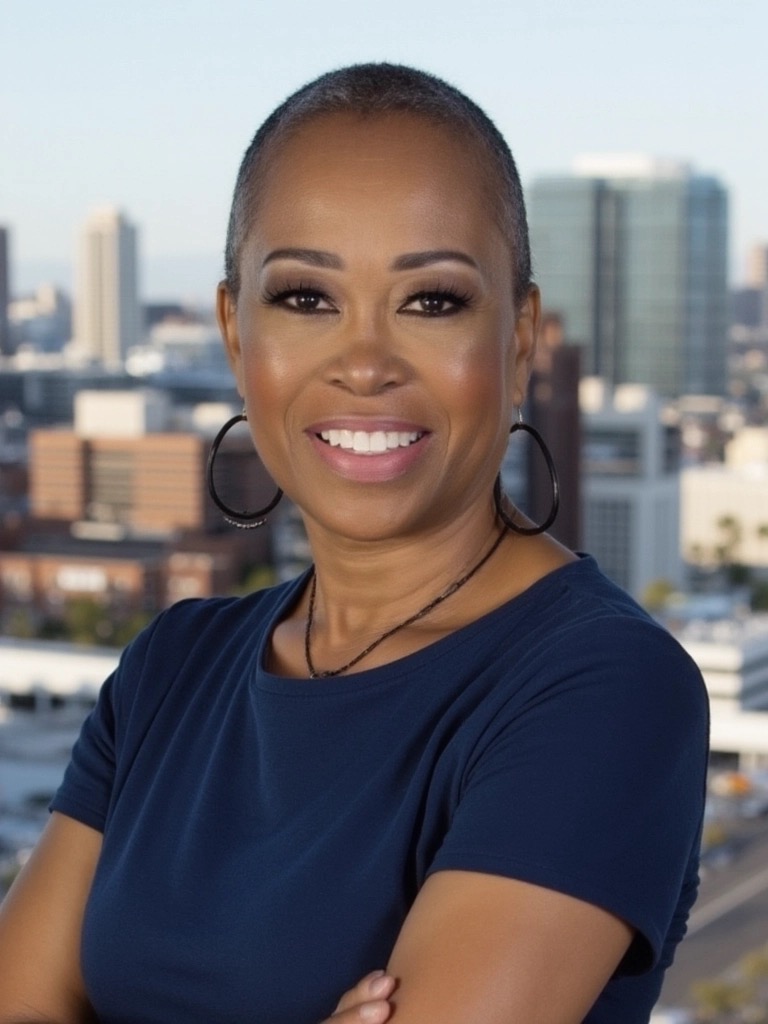
Sharon D Jones
Sharon D. Jones, M.Div., is a globally respected fundraising strategist, nonprofit leadership expert, and capacity-building architect with over three decades of experience. As the Founder and CEO of Nonprofit Solutions Matter, Inc., her proprietary growth frameworks have successfully mobilized nearly $957 million in philanthropic capital for local, national, and international organizations.
General Disclaimer & Disclosure
The information provided on this website is for general informational and educational purposes only. While we strive to keep content accurate and up to date, we make no representations or warranties of any kind, express or implied, about the completeness, accuracy, reliability, or suitability of the information contained herein.
Professional Advice
The content on this site does not constitute professional advice (e.g., legal, financial, medical, or tax). You should consult with a qualified professional before making any decisions based on the information provided on this website. Any action you take upon the information found on this site is strictly at your own risk.
Affiliate & Third-Party Links
Some articles on this site may contain affiliate links. If you click on an affiliate link and make a purchase, we may receive a small commission at no additional cost to you. We only recommend products or services we believe add value to our readers. We are not responsible for the content, privacy policies, or practices of any third-party websites linked within our articles.


