
Donor segmentation helps nonprofits make communication more relevant without creating a system their teams can’t maintain. Donor records may be incomplete or scattered across systems, while generic outreach can miss what supporters care about and how they engage.
A practical approach starts with reliable information, focuses on a few meaningful criteria, and connects each group to relevant, mission-aligned communication. The goal is a manageable process that supports stronger relationships and sound resource development, not a spreadsheet that reduces people to data points.
This guide explains how to choose useful criteria, create segments around actions your organization can take, and review them over time. You’ll also learn how to avoid common mistakes, such as relying on inaccurate records or building groups that don’t change what your team does.
Key Takeaways
- Build groups around shared characteristics that help your team make communication more relevant and appropriate.
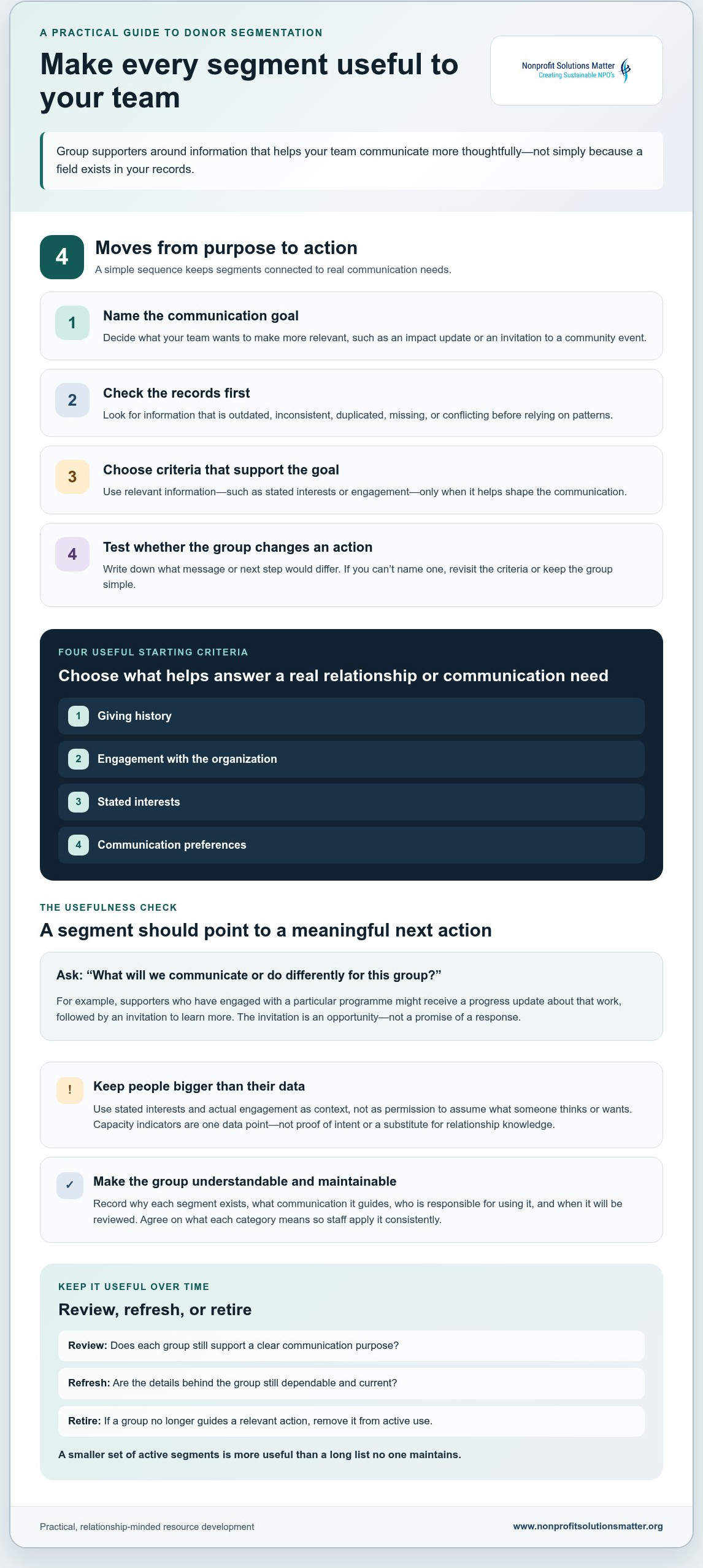
- Use donor segmentation as a purposeful process: set a communication goal, assess records, select criteria, and test whether each group is useful.
- Check for inaccurate, duplicate, or missing information before acting on patterns in donor records.
- Assign responsibility for using segment insights and updating meaningful interaction or preference details as relationships evolve.
What donor segmentation means, and what makes a segment useful
Donor segmentation is the practice of grouping supporters by relevant shared characteristics so an organization can choose an appropriate way to engage them. The purpose isn’t to sort people into permanent boxes. It’s to make resource development communication more useful to the people receiving it and more focused for the team sending it. The broader idea of grouping people by shared characteristics is explored in Market Segmentation on Wikipedia.
A segment earns its place when it points to a meaningful next action. Ask: “What will we communicate or do differently for this group?” If the answer is specific, such as sharing an update about a programme supporters have expressed interest in, the group can guide engagement. If the only answer is “they have the same label,” the segment isn’t useful yet. Connecting each group to an action keeps the approach relational rather than treating supporters as interchangeable records.
Which donor characteristics can guide meaningful segments?
Useful starting points include giving history, engagement with the organization, stated interests, and communication preferences. Choose a characteristic because it helps address a real relationship or communication need, not simply because a field exists in your database. For example, a community group might distinguish supporters who have attended events from those who prefer email updates, if the difference will shape the next message.
Start with the decision, then identify the information that can inform it. This helps avoid creating more groups than a small team can use. Donor segmentation has no universal template: the right criteria depend on your mission, the information supporters have shared, and the communication your organization can sustain. A useful segment is relevant, easy for the team to understand, and connected to a respectful next step.
How to create donor segments without reducing people to data
A disciplined process keeps segmentation connected to the relationships behind the records. Select criteria because they guide a relevant action, not just because the data is easy to collect. Use these steps to start with purpose and keep assumptions in check:
- Identify the communication goal. Decide what your team wants to make more relevant, such as an impact update or an invitation to a community event.
- Review available records. Check that information is current and consistent. Look for duplicate records, missing details, and conflicting entries before relying on apparent patterns.
- Choose criteria that support the goal. Use relevant information, such as stated interests or engagement, when it helps shape the communication. Don’t create a group solely because a data field is available.
- Test whether the group is useful. Write down what message or next step would differ for this group. If you can’t name one, revisit the criteria or keep the group simple.
How can nonprofits keep segmentation personal and mission-aligned?
Use a supporter’s stated interests and actual engagement as context, but don’t treat either as permission to assume what they think or want. Capacity indicators can inform resource development planning, yet they’re only one data point, not proof of intent or a substitute for relationship knowledge. Record why each segment exists and what communication it is meant to guide. This gives staff a shared rationale and helps prevent a category from becoming a fixed judgement about an individual.
For small teams, keep the approach manageable: use only segments someone can act on and maintain. Add a brief note to each group record describing its purpose, who is responsible for using it, and when the team will review it. Agree on what each category means, too, so staff apply it consistently. Clear definitions help colleagues use the information appropriately and adjust when communication needs or supporter details change.
How to put donor segments to work and keep them useful
A segment should shape the communication, not dictate how a supporter will respond. Use it to make an update more relevant, guide thoughtful stewardship, or identify a suitable next step. For example, supporters who have engaged with a particular programme might receive a progress update about that work, followed by an invitation to learn more. The invitation is an opportunity, not a promise of a response.
Make ownership clear so useful information doesn’t sit unused. Assign a staff member to prepare or coordinate communication for each active group, and decide who will record meaningful interactions or changes in preferences. Keeping those details current helps the team maintain continuity and prevents outdated assumptions from guiding future messages.
Review donor segmentation as an ongoing practice. At planned review points, ask whether each group still supports a clear communication purpose and whether the information behind it remains dependable. Revise groups whose purpose has changed, and retire those that no longer guide a relevant action. A smaller set of active segments is more useful than a long list no one maintains.
When is structured donor data support worth considering?
Consider adding structure if duplicate records make it hard to see a supporter’s history, staff use inconsistent categories, or the team struggles to produce groups it can confidently use. These issues can make communication less coherent and take time away from relationship-building.
Nonprofit Solutions Matter, Inc.'s Donor Data & Wealth Screening service includes data cleaning, de-duplication, and segmentation. This support can help establish more consistent records and usable groups as part of sound resource development infrastructure. The aim is not to let data replace relationship knowledge, but to give staff a clearer foundation for applying it.
Build a more responsive resource development practice
Donor segmentation can become more than a way to organize records. Used with care, it can help your team make considered decisions and build a steadier foundation for supporter relationships. Your next step needn’t be a complex redesign. Choose one communication need, identify the information that can guide it, and agree on how the team will learn from each interaction. Then adapt as supporter priorities and organizational needs evolve.
If your records make that work difficult, structured data support can help clarify the path forward. Nonprofit Solutions Matter’s founder brings more than 30 years of resource development experience, offering a seasoned perspective on building systems that serve mission-driven work.
With a thoughtful process, your team can build stronger connections one meaningful action at a time.
Frequently Asked Questions
How many donor segments should a nonprofit start with?
Start with a small number of groups tied to clear communication needs; donor segmentation has no universal target. Your starting point depends on the quality of your records, your team’s capacity, and the relationships you want to support. Begin with one distinction your team can apply consistently, then add another only when it will meaningfully shape communication.
Can a small nonprofit segment donors without a dedicated CRM?
Yes. A dedicated CRM isn’t essential for getting started. A small organization can use its existing records and a simple shared file to note a few consistent distinctions, such as a supporter’s preferred contact method. Agree on what each category means, keep information organized, and limit access to people who need it for their work.
Is donor segmentation only useful for major donors?
No. It can help a nonprofit communicate more thoughtfully with supporters across different giving histories, interests, and levels of engagement. A community group might send event details to people who have expressed interest in attending, while sharing a programme update with other supporters. The aim is to respect each person’s connection to the mission, not rank their value by capacity.
What is the difference between donor segmentation and donor profiling?
Segmentation groups supporters by shared criteria to help plan communication; profiling builds a broader picture of an individual. For example, a group may reflect a shared interest, while an individual profile may combine information from several interactions. Use information responsibly, distinguish confirmed details from assumptions, and collect or retain information only when it serves a clear organizational and relationship purpose.
Next Steps: Ready to make your donor data more useful? Book a 30-minute strategy call.
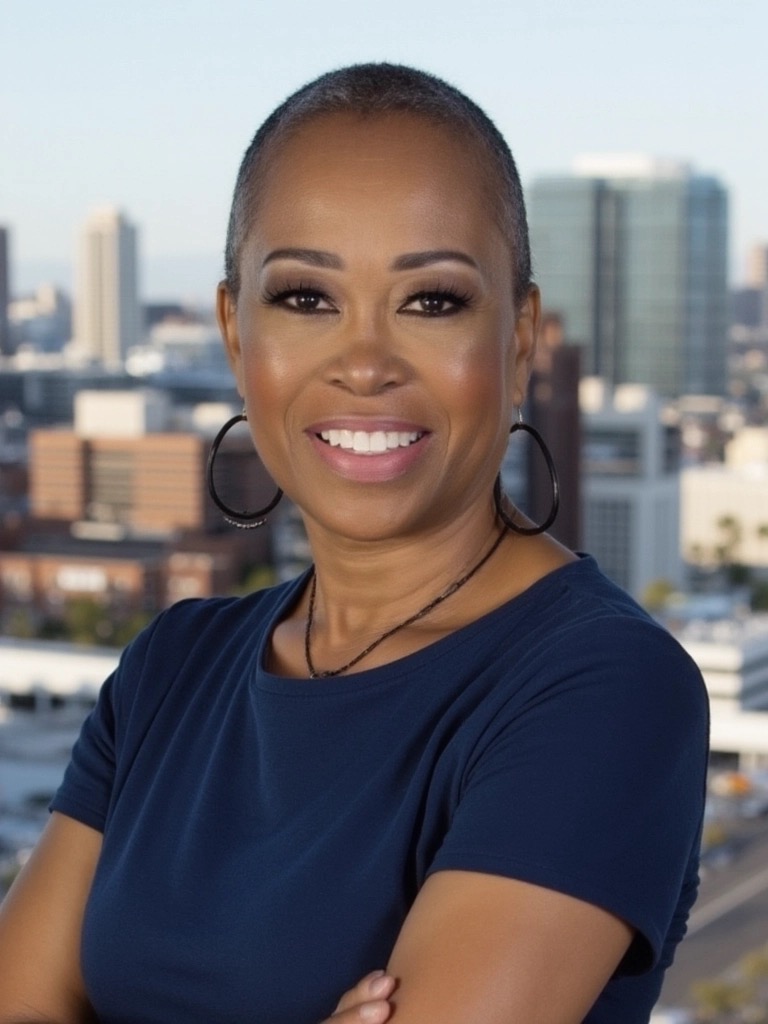
Article by
Sharon D Jones
Sharon D. Jones, M.Div., is a globally respected fundraising strategist, nonprofit leadership expert, and capacity-building architect with over three decades of experience. As the Founder and CEO of Nonprofit Solutions Matter, Inc., her proprietary growth frameworks have successfully mobilized nearly $957 million in philanthropic capital for local, national, and international organizations.
General Disclaimer & Disclosure
The information provided on this website is for general informational and educational purposes only. While we strive to keep content accurate and up to date, we make no representations or warranties of any kind, express or implied, about the completeness, accuracy, reliability, or suitability of the information contained herein.
Professional Advice
The content on this site does not constitute professional advice (e.g., legal, financial, medical, or tax). You should consult with a qualified professional before making any decisions based on the information provided on this website. Any action you take upon the information found on this site is strictly at your own risk.
Affiliate & Third-Party Links
Some articles on this site may contain affiliate links. If you click on an affiliate link and make a purchase, we may receive a small commission at no additional cost to you. We only recommend products or services we believe add value to our readers. We are not responsible for the content, privacy policies, or practices of any third-party websites linked within our articles.


